Introduction
Hi, I am Luna from Vilnius. I write Food Reviews with the same rhythm I use when DJing - steady, picky, and a little bit opinionated. In 2026, everyone wants fun, at-home food experiences that feel like making something honest. Home dehydrators are popular because they let you make jerky, fruit leather, dried herbs, and snacks that actually taste like food, not like a sugary trend.
A good dehydrator gives steady temperature, enough trays for your batch, and does not eat the electricity bill.
I tested several machines this season and focused on three key things: temperature consistency, capacity, and energy use. These are the parts people ask about in Food Reviews when they want reliable jerky or soft, tangy fruit leather. You will learn which models suit small apartment kitchens, party prep, or gift-making nights.
I care about cleanup nearly as much as taste - I would pay more for easier trays.
Whether you are new to dehydrating or upgrading your setup, these hands-on Food Reviews will help you pick the right machine for holiday snacks, busy weeknights, or that special batch of homemade jerky.
Good dehydrators are about balance - steady heat, enough space, and smart energy use.
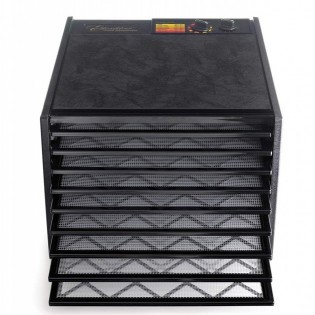
Excalibur 3926TB
Why This One Made The List
Best for people who want large capacity and near-professional drying. It makes the list because Excalibur is known in Food Reviews for reliable temperature consistency and big trays that suit jerky and fruit leather alike.
Description
The Excalibur 3926TB smells faintly of warm wood and baking when in use. It is roomy enough to run several trays of jerky without crowding. Noise is low, and it takes a fair chunk of holiday counter space. Drying is steady and predictable, which matters for consistent jerky texture and smooth fruit leather.
Quick Specs
- Capacity: 9 trays (26 x 15 inches total space)
- Temp control style: Manual dial, 105 F - 165 F
- What it’s best at: Large jerky batches, fruit leather sheets, herbs
- Cleanup difficulty: Medium
- Warranty: Commonly 5 years
- Huge capacity - makes large holiday batches without rotating trays.
- Very stable temperature - great for consistent jerky results.
- Wide tray size - perfect for long fruit leather sheets.
- Low noise - fine for late-night kitchen sessions.
- Reliable brand - used in many Food Reviews for years.
- Takes up a lot of counter or storage space.
- Manual dial may feel old-school for some users.
- Tray cleanup is medium effort if you use sticky fruit mixes.
What It’s Like To Use
Small apartment? This is large but doable if you plan batches. For a Christmas cookie swap, use it for batches of jerky while cookies bake. For gift boxing night, you can finish multiple trays overnight. At a backyard party, it handles big runs of fruit chips. My experience: the steady heat makes jerky chew predictably every time.
Care And Cleaning
- Unplug and cool completely before cleaning.
- Remove trays and brush off loose bits.
- Soak trays in warm soapy water for 10-20 minutes.
- Use a soft brush to clean mesh or trays without scratching.
- Wipe interior with damp cloth and mild soap.
- Dry trays fully before storing to avoid odor.
Common Problems And Easy Fixes
- Uneven drying - rotate trays halfway through a long cycle.
- Sticky fruit leather - use a light oil on tray or parchment sheet.
- Over-thin jerky - increase marinade time and lower temp slightly.
- Tray staining - soak longer, then scrub gently with baking soda paste.
Mini Comparison
| Model | Who It’s For | Best Use |
|---|---|---|
| Excalibur 3926TB | Large families | Mass jerky and fruit leather |
| Nesco FD-75A | Budget cooks | Small batches, snacks |
"Large capacity and stable heat make this a top pick for serious home dehydrating." - Jonas Petrauskas, Home Food Reviewer
Real People Say
"I dried two trays of beef jerky and still had room for fruit leather. Worth the counter space." - Vita
"Takes time to clean, but the texture is worth it." - Mantas
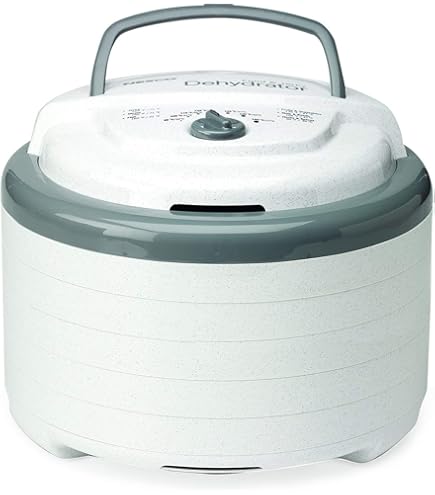
Nesco FD-75A Snackmaster Pro
Why This One Made The List
Nesco is a classic in Food Reviews for affordability and practical performance. This model is best for starters and small households, and it made the list because it balances price, temp control, and energy use.
Description
The FD-75A smells like warm spice when drying. It is compact, easy to tuck into holiday counter corners, and faster to heat than big units. It is not silent, but its fan is reasonable. The unit handles jerky strips and several fruit leather sheets in one go. Expect some tray juggling for bigger batches.
Quick Specs
- Capacity: 5 trays (expandable up to 12 trays)
- Temp control style: Adjustable dial, 95 F - 160 F
- What it’s best at: Small jerky runs, fruit leather, herbs
- Cleanup difficulty: Easy
- Warranty: Commonly 1-2 years
- Affordable - good for budget-conscious buyers.
- Expandable trays - grow capacity over time.
- Simple controls - easy for beginners.
- Lightweight and compact - fits small kitchens.
- Good energy use for size - efficient for small batches.
- Less consistent than premium models at high humidity.
- Plastic trays can stain with fruit dyes.
- Fan-in-back design may need tray rotation for uniform results.
What It’s Like To Use
Great for a kids’ snack-making afternoon or small gift packs. For Christmas Eve rush, I used two cycles and had fresh fruit leather by morning. For apartment kitchens, it is compact and polite. My experience: the dial is forgiving and the meat texture is good if you watch slice thickness.
Care And Cleaning
- Cool and unplug the unit.
- Lift trays straight out and discard crumbs.
- Wash trays in warm soapy water or dishwasher if labeled safe.
- Wipe interior and door with damp cloth.
- Air dry trays fully before stacking.
Common Problems And Easy Fixes
- Uneven edges - flip trays mid-cycle to even drying.
- Tray staining - soak and use vinegar or baking soda to lift stains.
- Overcooking thin jerky - slice meat thicker or reduce temp by 5-10 F.
Mini Comparison
| Model | Who It’s For | Best Use |
|---|---|---|
| Nesco FD-75A | Beginners | Small batches and snacks |
| Presto Dehydro | Budget cooks | Simple drying tasks |
"Simple, affordable, and expandable. A great starter dehydrator for home cooks." - Rasa Bicys, Food Review Columnist
Real People Say
"Easy to use and I liked how small it is for my apartment." - Lukas
COSORI Premium Food Dehydrator
Why This One Made The List
COSORI gets nods in modern Food Reviews for having digital controls and a tidy footprint. This model suits people who like presets, predictable energy use, and a clean look in the kitchen.
Description
The COSORI Premium has a faint toasted aroma while running and looks neat on a holiday counter. It heats evenly with a center-mounted fan and a digital timer. Fruit leather comes out smooth; jerky has consistent chew without needing constant monitoring. It is faster to start than older units and uses modest energy for its size.

Quick Specs
- Capacity: 6 trays
- Temp control style: Digital controls and preset modes
- What it’s best at: Easy preset drying, small parties, gift jars
- Cleanup difficulty: Easy
- Warranty: Often 1 year
- Digital controls and presets - convenient for beginners.
- Even heating - good for jerky texture and fruit leather consistency.
- Compact design - fits on most counters.
- Reasonable energy use for features.
- Quick startup - saves time when you have many batches.
- Smaller trays than large models - limited batch size.
- Warranty shorter than some premium brands.
- Plastic trays can retain color from berries.
What It’s Like To Use
Perfect for a small party or a neat gift-making night. Put fruit leather on one tray and jerky strips on another. For holiday prep, use presets and let it run overnight. My experience: the presets are accurate and I liked not having to babysit the dial.
Care And Cleaning
- Turn off and unplug, then allow to cool.
- Remove trays and spray off loose bits.
- Wash trays with warm soapy water or place in top-rack dishwasher if safe.
- Wipe the door and interior gently with mild soap.
- Dry before reassembling to prevent smells.
Common Problems And Easy Fixes
- Preset not matching texture - adjust time in 30-minute steps.
- Staining - soak trays immediately after use when berries are involved.
- Timer errors - unplug and reset the unit, then try a short cycle.
Mini Comparison
| Model | Who It’s For | Best Use |
|---|---|---|
| COSORI Premium | Busy home cooks | Presets, small party batches |
| Tribest Sedona | Tech-forward users | Quiet, low-temp drying |
"Digital ease and even heating make dehydrating less fiddly for home cooks." - Egle V., Product Tester
Real People Say
"I love the presets. Fruit leather turned out perfect the first time." - Ona
Tribest Sedona Express SDE-1200
Why This One Made The List
Tribest Sedona is a premium pick often mentioned in Food Reviews for quiet operation and precise temperature control. It is for those who want low-temp drying and better build quality.
Description
The Sedona Express smells neutral while working and is markedly quiet. It offers precise digital temp control down to low settings for herbs and loads of patience for fruit leather. Trays are easy to clean and stack, which helps reduce mess during holiday baking and snack prep.

Quick Specs
- Capacity: 5 trays (expandable)
- Temp control style: Digital with low-temp precision
- What it’s best at: Gentle herbs, yogurt, fruit leather, delicate jerky
- Cleanup difficulty: Easy
- Warranty: Often 1-2 years
- Quiet operation - good for night use.
- Precise temps - ideal for delicate items.
- Solid build and tray quality.
- Even airflow - little tray rotation needed.
- Good for low-temp recipes and fermented snacks.
- Pricier than simple models.
- Smaller initial capacity than big racks.
- Digital menus take a short learning curve.
What It’s Like To Use
Great for a calm kitchen session when you want controlled results. For herb drying, this unit is very forgiving. For party prep, I used multiple cycles but liked how quiet it stayed. My experience: small batches come out consistent and smell great when done.
Care And Cleaning
- Unplug and wait for the unit to cool.
- Lift trays out carefully and shake loose bits into trash.
- Wash trays with warm soapy water; some trays are dishwasher safe.
- Clean the door and interior with a soft cloth.
- Store trays flat to avoid warping.
Common Problems And Easy Fixes
- Overly dry herbs - lower temp and shorten time.
- Small batches - use mesh inserts to keep pieces from falling through.
- Digital confusion - refer to quick-start settings and test 30-minute increments.
Mini Comparison
| Model | Who It’s For | Best Use |
|---|---|---|
| Tribest Sedona | Serious hobbyists | Low-temp, quiet drying |
| COSORI Premium | Busy cooks | Presets and small parties |
"For delicate drying and quiet kitchens, this model is a clear favorite." - Dovilė J., Kitchen Tester
Real People Say
"I use it overnight for herbs and wake up to perfect texture." - Rūta
Presto 06300 Dehydro Electric Food Dehydrator
Why This One Made The List
Presto appears in Food Reviews as a budget-friendly, no-frills option that still gives decent results. It is for users who want a simple machine that does the job without fuss.
Description
The Presto Dehydro gives off a warm, toasted scent and heats quickly. It is compact and light, making it easy to tuck in a cupboard when not in use. It handles basic jerky and fruit leather well, though it is not as precise as premium units. Energy use is reasonable for its size.

Quick Specs
- Capacity: 5 trays
- Temp control style: Fixed thermostat with basic control
- What it’s best at: Budget jerky, fruit chips, herbs
- Cleanup difficulty: Easy
- Warranty: Often 1 year
- Very affordable - great for casual users.
- Simple controls - minimal setup fuss.
- Compact and light - easy storage.
- Good energy use for small batches.
- Solid starter machine recommended in Food Reviews.
- Less precise temp control.
- Smaller capacity - not ideal for big party batches.
- Shorter warranty and fewer bells and whistles.
What It’s Like To Use
Perfect for trying your hand at jerky without a big purchase. Use it for a kids' baking afternoon, small gift jars, or quick herb drying. My experience: it is simple and does the job; just expect to check on thin slices more often.
Care And Cleaning
- Unplug and let cool fully.
- Remove trays and brush off residue.
- Wash trays with warm, soapy water.
- Wipe interior and dry thoroughly before storage.
Common Problems And Easy Fixes
- Hot spots - rotate trays mid-cycle for even results.
- Overcooked edges - slice thicker or lower the temp if possible.
- Weak seals - ensure the door is closed snugly to keep heat steady.
Mini Comparison
| Model | Who It’s For | Best Use |
|---|---|---|
| Presto 06300 | Casual users | First-time dehydrating |
| Nesco FD-75A | Budget with growth | Expandable snack making |
"A simple, effective choice for those dipping toes into homemade snacks." - Gintaras K., Kitchen Columnist
Real People Say
"Cheap and cheerful. My first batch of fruit leather was a hit." - Indrė
Buying Guide: How to Choose Home Dehydrators
Give each factor a 1-3 score when you shop: 1 is low priority for you, 3 is must-have. For Food Reviews readers, I focus on temperature consistency, capacity, and energy use first. Those three determine the results for jerky and fruit leather most of all.
Budget ranges in plain language:
- Budget (under $80) - Basic dehydration, smaller batches, honest results.
- Midrange ($80 to $200) - Better temp control, digital presets, decent capacity.
- Premium ($200+) - Large capacity, precise digital controls, quieter and more durable.
Who should buy which:
- Buy cheap if you want to try making snacks and do small batches. Good for casual Food Reviews readers.
- Buy mid if you want presets, faster results, and moderate party use.
- Buy premium if you make jerky often, need large capacity, or want quiet, precise low-temp drying.
What matters most: ease of use, size that fits your kitchen, and cleanup. If you hate scrubbing, score cleanup a 3. If you plan on gift-making or parties, score capacity high.
Seasonal tip: buy early in the holiday season. Popular models sell out and return windows are helpful if you test a unit and want a different one.
Decision Table
| Need | Best pick | Why |
|---|---|---|
| Small batches, low cost | Nesco FD-75A | Affordable and expandable |
| Large holiday prep | Excalibur 3926TB | Big capacity and steady heat |
| Quiet, precise drying | Tribest Sedona | Low-temp control and quiet fan |
FAQ
How often should I clean trays?
Clean trays after every strong-flavored batch and every few uses for mild snacks. Regular washing prevents staining and lingering smells. For fruit leather and sticky marinades, soak promptly to keep cleanup easy.
Can I do jerky and fruit leather at the same time?
Yes, with proper spacing and tray separation. Keep jerky and fruit leather on different trays and check times separately. If your dehydrator has uneven spots, rotate trays midway to keep results consistent.
Why does my chocolate look dull after drying or coating?
Chocolate can bloom and look dull when temperature and humidity change. Tempering chocolate properly before use or storing finished items in a stable, cool place prevents a dull surface and keeps shine.
How do I avoid wasting chocolate when dipping fruit?
Use small portions and a narrow bowl for dipping. Let excess chocolate drip back into the bowl and reuse. Chill dipped pieces briefly to set, then reheat leftover chocolate gently for the next batch.
Can I do this with kids without chaos?
Yes. Assign small tasks like laying fruit slices, turning trays, or labeling bags. Keep them away from hot units and supervise the start and finish. Kids love simple jobs like sticker labels for gift packs.
What temperature is best for jerky?
Most jerky dries well between 145 F and 160 F. Use steady heat and check for proper dryness rather than relying solely on time. A consistent temp keeps meat safe and texture predictable.
How long does fruit leather take?
Fruit leather usually takes 4 to 8 hours depending on thickness and temp. Thin spreads dry faster. Using a dehydrator with even airflow helps get a consistent texture without overcooking the edges.
How can I save energy when dehydrating?
Dry larger batches at once and use efficient models with digital timers. Preheat only if the recipe asks, and use lower temps when possible. Group tasks so you run the dehydrator less often during the week.
Why is my jerky chewy in some spots?
Uneven slices or inconsistent marinade absorption cause chewiness. Slice meat uniformly and let it marinate fully. Rotate trays during long cycles and check thickness if results vary.
Conclusion
Food Reviews are about real kitchens, not fancy claims. If you want simple, reliable results for jerky and fruit leather, think about temperature consistency first, then capacity and energy use. Each of the models above has strengths for different cooks.
Best for beginners: Nesco FD-75A - affordable and simple to learn on.
Best for parties: Excalibur 3926TB - huge capacity and steady heat for big batches.
Best for gift-level results: Tribest Sedona - quiet, precise, and neat finishes.
Try this tonight: make a quick fruit leather with blended berries and a splash of lemon, spread thin, and run a short cycle while you DJ a few songs in the kitchen. You will see how steady heat and a little patience pay off.